
What to Say at a
Celebration of Life
When words feel impossible, here are honest ones — and one idea that lets music say what you can't.
✦ Commission Your Song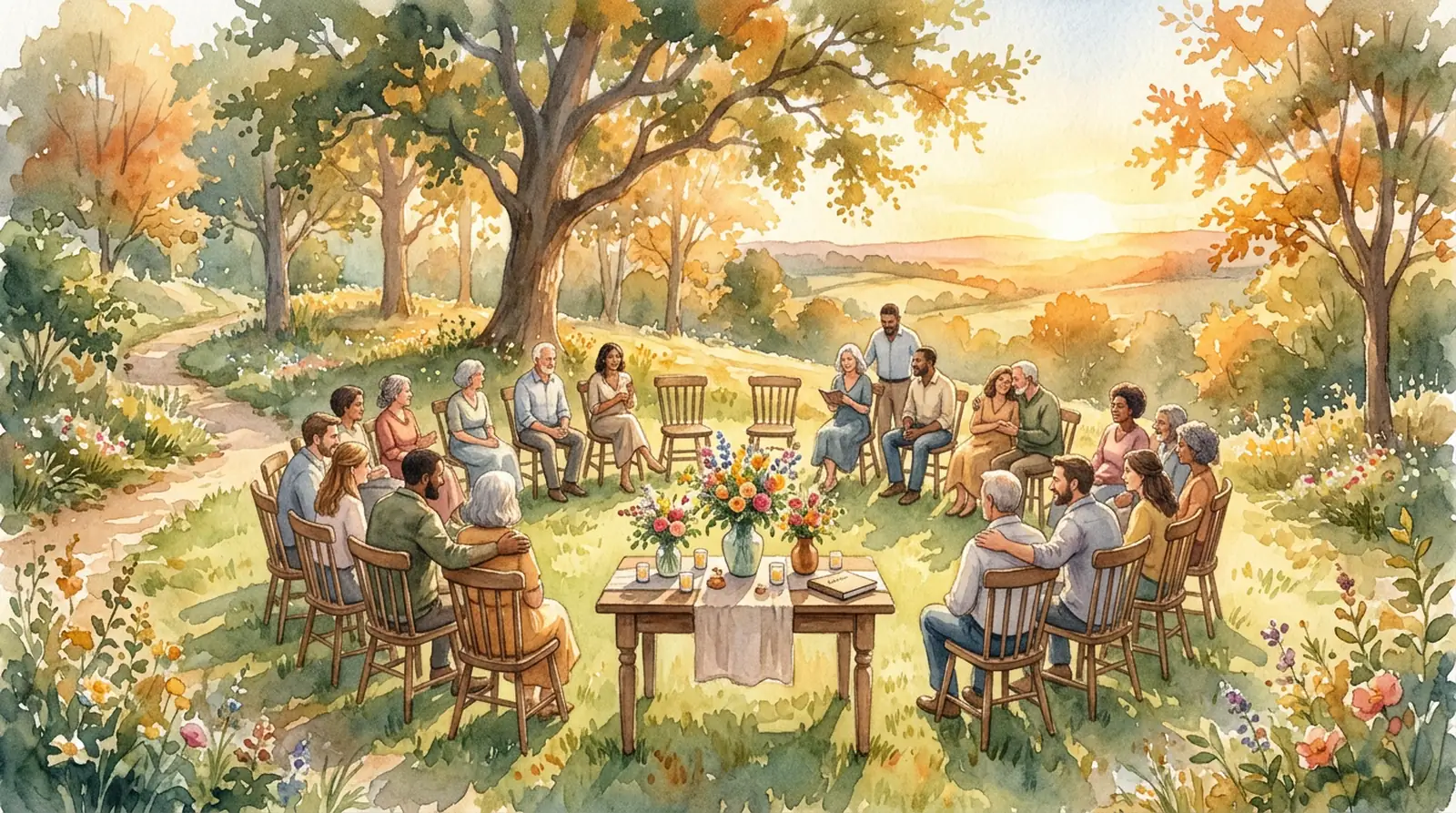
Either way — you're here because you loved someone.
What a Celebration of Life Actually Is
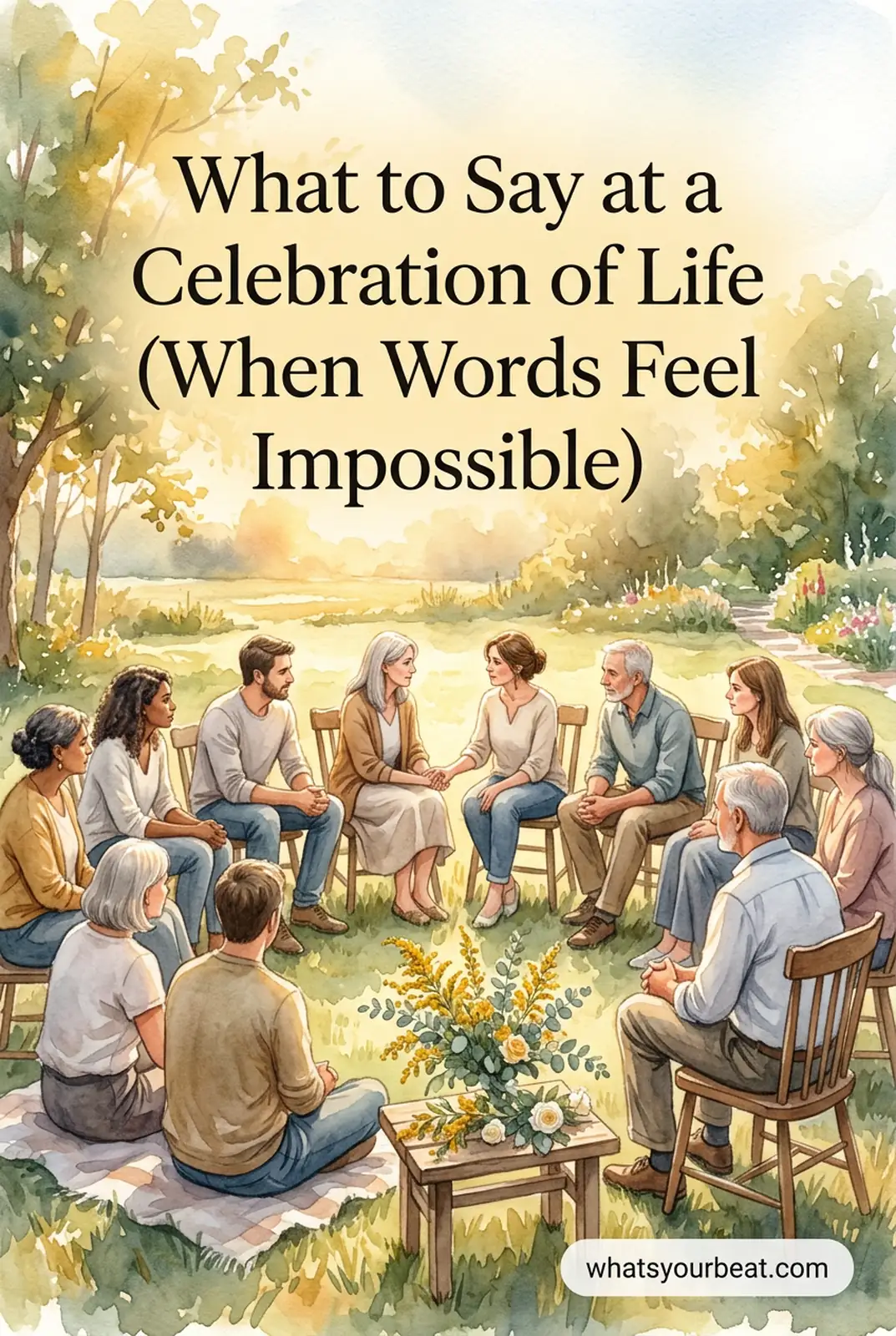
A celebration of life is a gathering that focuses on who someone was, not just that they're gone. It's less formal than a traditional funeral. There's usually no set script. That's what makes it meaningful — and what makes it hard.
People share stories. They laugh. They cry. They might play music, look through photos, or just sit together. There's no wrong way to do it.
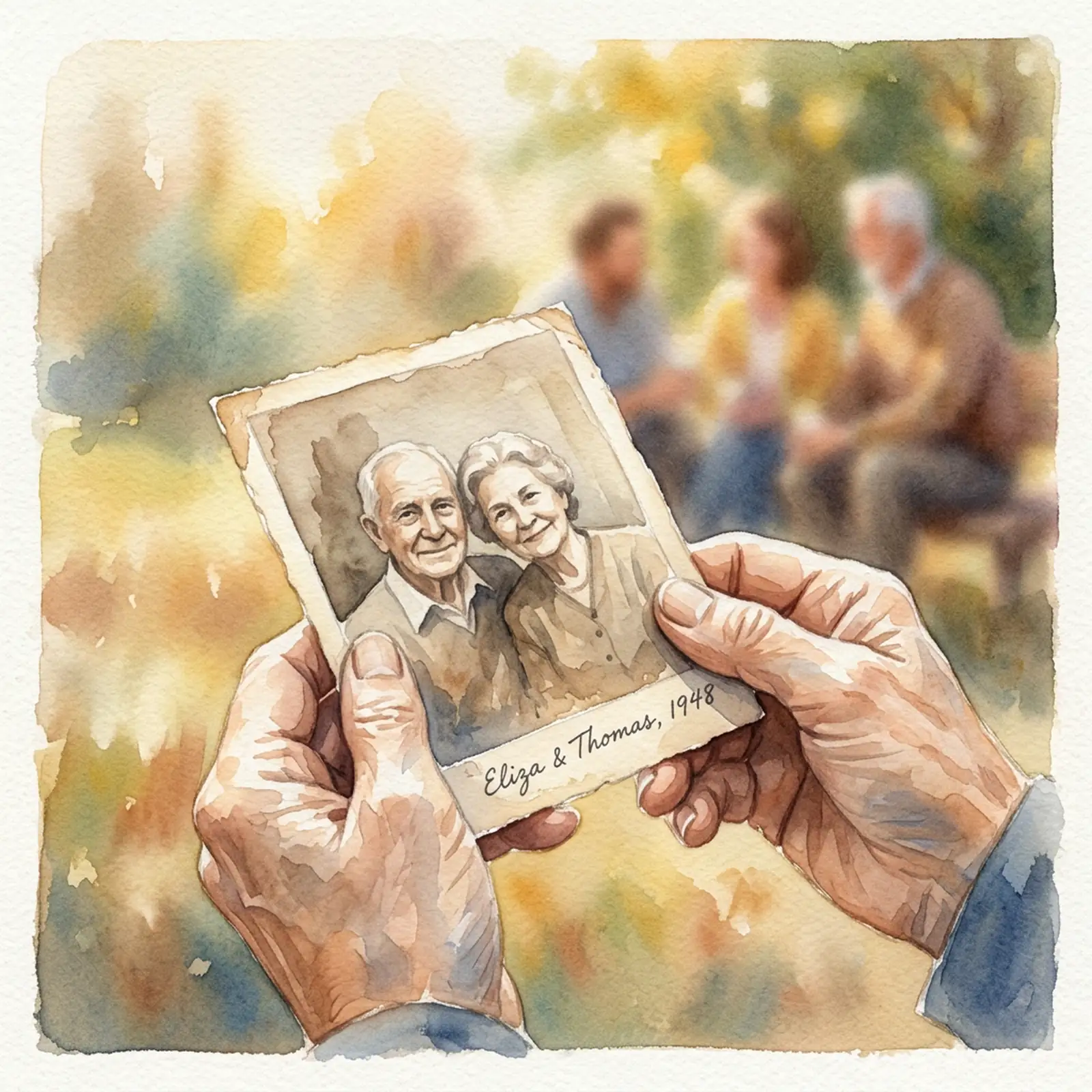
But when you're the one who has to speak? It's a different feeling. You want to get it right. You want them to know what this person meant. And the pressure of that can make words disappear.
That's normal. It happens to almost everyone who's ever been asked to speak at a memorial. The good news is: you don't have to be eloquent. You just have to be honest.
There's a post on honoring someone on their birthday after they're gone — many of the same ideas there apply here too.
What to Say — and What Not to Say
Some phrases feel kind but can land the wrong way. Others feel scary to say out loud, but they're exactly what the room needs to hear.
Here's a quick look at the difference:
| Try to avoid | Try this instead |
|---|---|
| "They're in a better place." | "I'm just so glad I got to know them." |
| "At least they lived a long life." | "No amount of time would've felt like enough." |
| "I know exactly how you feel." | "I can't imagine. I'm just here." |
| "They wouldn't want you to be sad." | "It makes sense to feel everything right now." |
| "Everything happens for a reason." | "This is really hard. And you don't have to have the words." |
| "Let me know if you need anything." | "I'm bringing dinner Tuesday. No need to reply." |
The phrases on the left aren't wrong because people are careless. They're wrong because grief doesn't follow logic. Telling someone their person is "in a better place" asks them to feel okay when they don't. That's a hard ask.
If you're not sure what to say, short is fine. Real is better than polished.
Real Things You Can Say
You don't need to write a speech. Start with one thing — a single memory, a single truth — and let it lead you.
Don't try to cover their whole life. Pick one moment you'll never forget. "The day she laughed so hard she knocked over her coffee" lands harder than a list of achievements.
Not a lesson from a book — something you actually learned from watching them live. "He showed me that showing up is enough" is the kind of thing people remember.
You don't have to dress it up. Saying "I just really miss her" in a room full of people who feel the same thing can break the tension in the best way.
A phrase they always said. A habit they had. Something that makes the room nod because they all knew it too. That's how you bring someone back into the room, just for a moment.
Keep it to two to four minutes. About 300 to 500 words out loud. Shorter is fine. Nobody leaves a celebration of life thinking "that tribute was too brief." They leave thinking about the person.
If you want more ideas on how to support people through loss, there's a post on what to say to someone who's grieving — a lot of those same phrases work at a service too.
The room doesn't need a perfect speech. It needs to hear your love out loud.— What's Your Beat
When a Song Says It Better
Some people stand up and speak beautifully. Others freeze. Some cry before they can say their name. All of that is fine.
But sometimes the kindest thing you can do is let a song take over. A song that tells the story. That names the person. That plays in the room while everyone just … breathes.
That's what I do at What's Your Beat. You share the story — who they were, what they meant, the things only you'd know — and I write and record a custom song from that.
Professional commissions start at $49. Other premium human songwriting services charge $150–$200+ for the same experience.
A lot of people reach out to me after a loss. They say the song gave people at the service something to hold onto. It became the moment that tied everything together.
There's also a post specifically about legacy songs for celebrations of life if you want to read more about that.
If You Can't Get the Words Out
You might get up there and just cry. That happens. A lot.
Here are a few things that actually help:
Ask someone to read for you
Write your words down and hand them to a friend. Ask them to read on your behalf. Your words still reach the room — just with their voice.
Write a note instead
Print it out. Pass it around. Or leave it on a table near the photos. People will read it quietly. That counts.
Let a song speak
If speaking isn't something you can do that day, a song can carry what you need to say. You don't have to choose between speaking and honoring someone. A custom song can do both.
Show up. That's enough.
Sometimes the most powerful thing at a celebration of life isn't a speech. It's the people who came. If you're there, that already says everything.
If you're supporting someone through grief and not sure what to say to them, take a look at the FAQ page — it covers a lot of what people ask when they're navigating loss.
Let a Song Say What Words Can't
Share the story. I'll write and record something just for them — a song that fits the service, fits the person, and fits what you're holding.
✦ Commission Your Song See Pricing & PackagesQuestions People Ask

Richard Nelson
Songwriter & Founder, What's Your Beat
In 2024, I lost my wife. I built What's Your Beat as a mission — not a business — because I knew how much a song could mean when words weren't enough.
I write and produce every song myself, using AI as a creative tool — not a replacement. When I first started, songs were free. As demand grew, I moved to a professional commission model — starting at $49 — to keep this sustainable. Each month, I quietly select one person from recent commissions and refund them in full through the Compassion Fund — no application, no announcement. It's simply something I do because I believe some stories deserve music regardless of the price.
