
Meaningful Gift for a Grieving Friend: What Actually Helps

You want to do something. You really do.
But what do you say? What do you give? When your friend is in the middle of the worst pain of their life, it can feel like nothing is enough — and you're terrified of getting it wrong.
Here's the truth: the fact that you're searching for the right gift already means you're showing up. That matters more than you know.
This guide is for people who want to go beyond a sympathy card. You want to give something that lasts — something that says, "I see your loss, and I see the person you lost." We'll walk through what grief actually looks like from the inside, what kinds of gifts land and why, and seven specific ideas that go beyond the grocery store aisle.
Why Generic Gifts Fall Flat
We've all sent them. The grocery store flowers. The sympathy card with a printed verse. A candle that smells like "tranquility."
None of these are bad. But they carry a quiet, unintentional message: I didn't know what to do, so I did the easy thing.
Grief is deeply personal. Your friend isn't just "sad." They're missing a specific person — a laugh that no one else had, a way of saying their name, a phone call that no longer comes. Generic gifts can accidentally brush past all of that. They offer comfort to the grieving person in the abstract — but not to your friend, in their particular loss.
There's also a timing problem. Most gifts arrive in the first week — right after the death, when the family is surrounded by people and food and noise. But grief often gets louder in the weeks and months that follow, when everyone else has moved on and your friend is sitting alone with it.
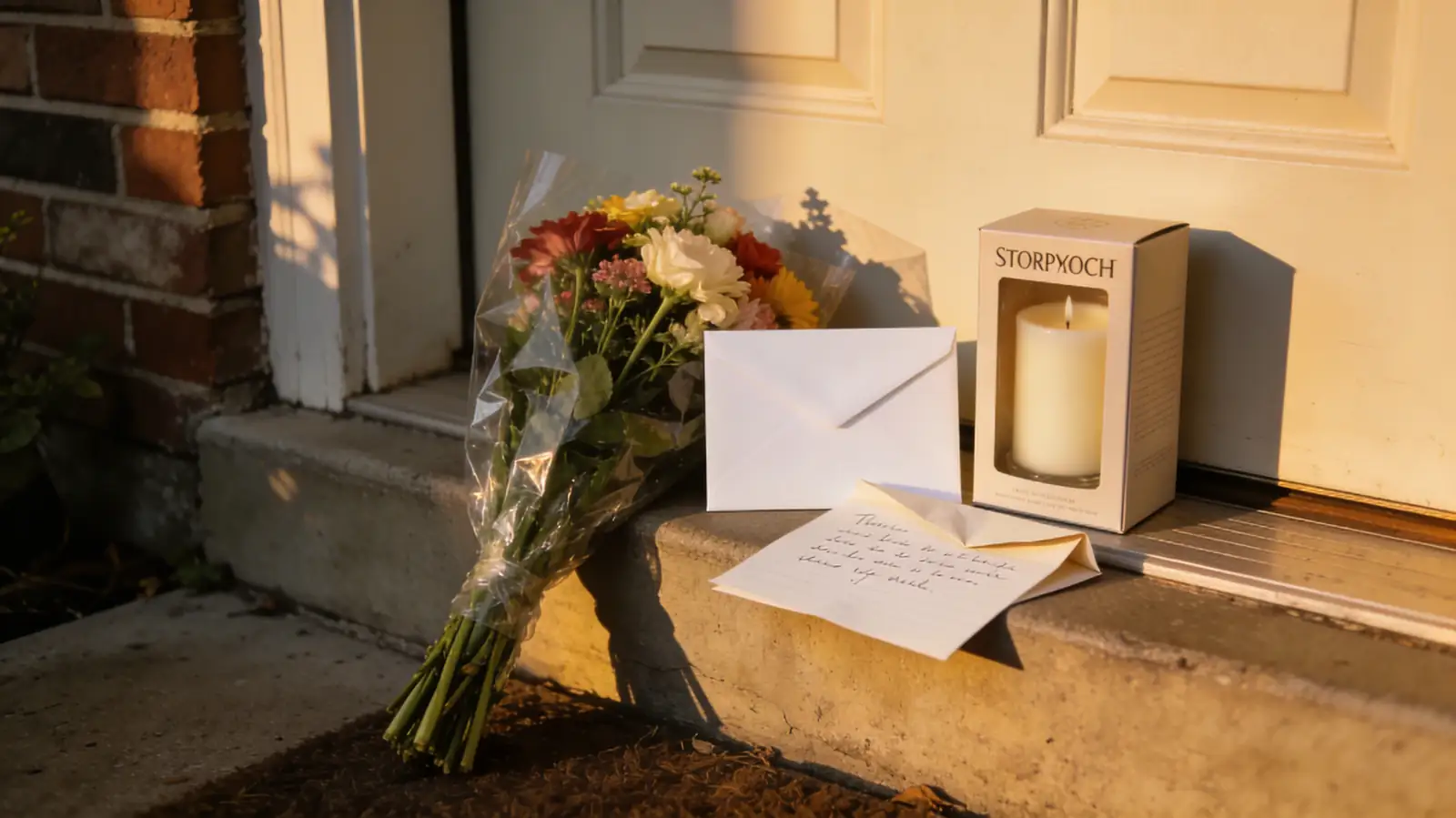
The best grief gifts have one thing in common: they say the person's name. They acknowledge who was lost, not just that a loss happened. That's a harder thing to find. But it's not impossible — and it's exactly what we'll help you find here.
What a Grieving Friend Actually Needs
Before you choose a gift, it helps to understand what grief actually feels like from the inside.
In the first days and weeks, people are often numb. They go through motions. They receive casseroles. They say "I'm fine" because it's easier. Then the visitors stop coming. And that's often when grief gets loudest — when the rest of the world resumes and your friend is still carrying the weight of what they lost.
This shifts how you think about gifts. Instead of asking "what will make them feel better," ask: "what will make them feel less alone — and less like their person is being forgotten?"
According to the American Psychological Association, most bereaved people benefit most from social support and connection — knowing they aren't navigating loss in isolation. Practical help is always welcome: meal delivery, help with chores, just showing up. But the gifts that get kept and returned to? Those are the ones that hold a memory.
A photo book. A memory quilt made from old clothing. A plant that grows year after year. A song commissioned about the person they lost. Those are the things your friend will still have in twenty years, pulling them close to someone they'll always miss.
7 Meaningful Gift Ideas That Last
Here are seven genuinely thoughtful options — each one personal, each one enduring. These aren't ranked by price; they're ranked roughly by how long they tend to stay with the person who receives them.
-
A Custom Memorial Song
An original song commissioned specifically about the person who passed — built from stories and memories you share. Your friend can listen to it on hard days, play it at a memorial, pass it down. It's the only gift that literally says the person's name and carries their story in music. Commissions at What's Your Beat start at $49.
-
A Curated Memory Book
Not the kind you buy off a shelf. Reach out to mutual friends and family. Gather photos, anecdotes, little memories. Write captions. Create something that captures who the person was, not just what they looked like. Services like Artifact Uprising make the final product beautiful — but the real work is in the gathering, and that's all you.
-
A Living Memorial: Plant or Tree
Seeds or a small planted tree tied to the deceased's favorite flower or season. Every bloom is a reminder. It grows alongside your friend's grief — changing, renewing, persisting — the way love does. Organizations like the Arbor Day Foundation let you plant a tree in someone's memory with a dedication card included.
-
A Donation in Their Person's Name
Find out what the person who passed cared about — animals, education, cancer research, a local organization they volunteered with. A donation in their honor says their values still ripple outward. Most charities will send a card to your friend acknowledging the gift was made in memory of their person.
-
A Meaningful Piece of Memorial Jewelry
A locket with a photo. A ring with their birthstone. A bracelet stamped with their name or a date. Memorial jewelry companies like Eterneva even create diamonds from ashes or hair. These are gifts that go wherever your friend goes — a quiet, constant reminder that carried love doesn't disappear.
-
A Meal Train or Experience Subscription
Grief is exhausting in a way that's hard to explain. Cooking feels impossible. A meal delivery subscription (Factor, Hello Fresh, or a local meal train organized through MealTrain.com) gives your friend one less thing to think about during the months when grief is heaviest. Pair it with a note that commits to showing up long after the service.
-
Your Time and Consistent Presence
It sounds too simple. But showing up — a walk, a meal, a movie on the couch — is often what a grieving person needs most and gets least. The key word is consistent. Don't just say "I'm here." Put something on the calendar. Text on the hard days. Keep showing up when everyone else has stopped.

The Gift of a Song Written Just for Them
Music holds memory in a way nothing else can.
A specific song can take you back to a moment in an instant. The melody carries the feeling when words don't work. And a song written about the person your friend lost — that becomes something they'll never want to give back.
That's what What's Your Beat does. You share stories and memories about the person who passed: their sense of humor, their quirks, the little things only your friend would know, the moments they'd want remembered. Those memories become original music, crafted with real care.
The song is theirs forever. They can listen to it on hard days. Play it at a memorial or a celebration of life. Share it with family members who never got to hear it. Pass it down to children who will only know this person through stories.
I started What's Your Beat after losing my wife in 2024. I knew what it felt like to have no words — and to have music be the only thing that helped. I built it as a mission to give that same comfort to anyone who needs it.
AI is part of my creative process — I use it the way a writer might use a thesaurus — but every song is personally written, shaped, and produced by me. Every commission is read personally. Every story is treated with the care it deserves.
You can also read about unexpected grief reactions after a loss — it may help you understand what your friend is navigating right now, and how a gift like this lands differently at different stages of grief.

What to Say When You Give the Gift
Even the most beautiful gift can land awkwardly if the words around it feel off. A few things that help:
Say the name of the person who died. Don't avoid it. "I've been thinking about [Name] a lot lately" opens more than "I've been thinking about you." It tells your friend you see their loss as a loss of a specific, irreplaceable person — not just an abstract event they need to recover from.
Don't make it about resolution. Avoid language that implies the gift will help them "heal," "move forward," or "find peace." Grief isn't a problem to solve. Let the gift be what it is — a gesture of witness, not a prescription.
Give it without strings. No follow-up questions about whether they liked it. No checking in for validation. Leave room for them to receive it in their own time, in their own way. Some grief gifts get opened weeks later. That's not a rejection — it's how grief works.
Write something real. A handwritten note alongside any gift matters. It doesn't need to be long. "I loved [Name] too. I wanted you to have something that holds that" is enough. Personal and true beats eloquent every time.
For more guidance on the words themselves, there's a dedicated post on what to say to someone who is grieving — including specific phrases that help and ones to avoid.
When to Give (It's Never Too Late)
A lot of people worry they've missed the window. The funeral was weeks ago. Life has moved on for everyone else.
But grief doesn't work on a timeline. It doesn't wrap up after the service.
Many people say the hardest moments come three, six, even twelve months later — the first holiday without them, their birthday, an ordinary Tuesday when the sadness arrives out of nowhere. Those are the moments when your friend could most use a reminder that they are not alone in it.
Show up. Bring food. Don't ask what they need — just do something. This is the logistics phase; your friend is in survival mode.
Everyone else has gone home. This is when a meaningful, personal gift lands hardest — because it proves you're still thinking of them.
Their person's birthday. The holidays. The one-year mark. A gift on these days carries something extra — it says: I remembered. I still remember.
A song, a note, a donation in their name — these don't require a date or occasion. "I was thinking of you and [Name] today" is always enough of a reason.
So if you're reading this weeks or months after someone they loved passed — that's not too late. It might even be perfect timing. A meaningful gift, given when everyone else has moved on, carries something extra: I still think about you. I still think about them.
Frequently Asked Questions

Honor Their Memory in Music
A custom song commissioned about the one they lost. Personal, lasting, and made with care.
Commissions start at $49 — share the story, and I'll create the song.
Questions? See pricing & packages →
