
Grief & Caregiving
When Someone You Love Has Dementia: Meaningful Gifts and the Power of Music
For anyone searching for a gift that can reach past the forgetting — and for anyone sitting with a loss that hasn't fully happened yet.
✦ Commission Your Song — From $49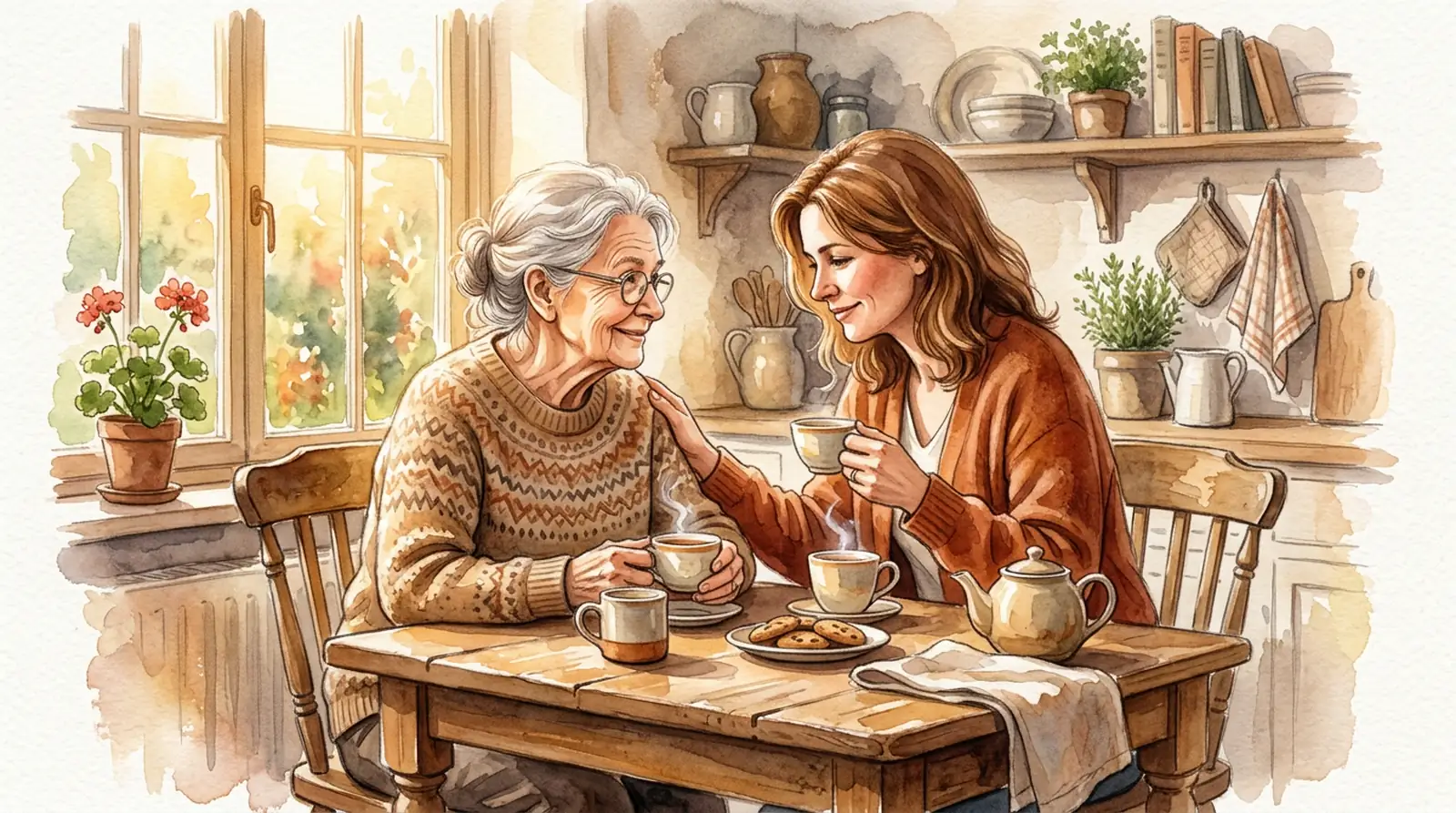
Finding a meaningful gift for someone with dementia feels different from most gift-giving. You're not just shopping for something they'll enjoy for a few days. You're looking for something that can reach them — past the confusion, past the forgetting — and let them know they're deeply loved.
It's one of the hardest kinds of shopping there is. Most traditional gifts don't travel well into this kind of loss. Flowers fade by Thursday. Photo albums can sometimes bring more pain than comfort. Gadgets confuse. Cards get read once and forgotten. What you actually want is something that can meet your loved one exactly where they are — and mean something in the moment they receive it.
Music can do that. Research on how the brain processes familiar melodies shows that musical memory often persists even in later-stage dementia — long after other kinds of memory have faded. A custom song commission takes that one step further. It isn't just any music from the radio or a streaming playlist. It's a song built entirely from their life — their name, their story, the people and memories that made them who they are.
This post is for anyone looking for a gift that goes deeper than the usual options. It's also for anyone sitting with anticipatory grief — the specific kind of loss that comes when someone you love is still here, but slowly slipping away. Both things can be true at the same time: you're still giving, and you're already grieving. You don't have to choose between them.
What Anticipatory Grief Actually Feels Like
There's a kind of grief that doesn't have a name most people recognize. It's the grief of losing someone who's still here.
When a parent, grandparent, or partner has dementia, you often find yourself mourning them in real time. You grieve the conversations you used to have — the long phone calls, the inside jokes, the way they'd tell the same stories every Christmas and you'd laugh anyway. You grieve the version of them that knew your name without a pause. You grieve things that haven't fully happened yet, and then feel guilty for grieving at all.
This is called anticipatory grief. It's real, it's common among caregivers and family members of people with dementia, and it doesn't mean you've given up. It means you love them and you're paying close attention.
Giving a gift during this time serves more than one purpose. It's partly for them — a moment of warmth, of being truly seen. But it's also partly for you. It's a way of saying, out loud: I'm still here. You still matter. This time with you still counts.
A lot of people in this situation quietly stop doing small, loving things for their person because it feels pointless, or because they don't know what still lands. But presence and love do land — even when the cognitive response is limited. The act of showing up with something thoughtful still reaches.
There's a post on unexpected grief reactions and feelings after loss that explores this kind of layered grief in more depth — it may help if you're finding it hard to name what you're feeling.
Why Music Reaches People With Dementia
Researchers who study Alzheimer's and dementia have found something remarkable. While other memories and cognitive functions deteriorate, emotional and musical memory often holds on far longer than expected.
You may have seen the videos that circulate online — a person who seems completely unreachable suddenly coming alive when a familiar song plays. Eyes brightening. Feet starting to move. A name or a lyric surfacing that hadn't been heard in months. That isn't a coincidence. Music is processed differently in the brain than language or visual memory. It activates areas connected to emotion and long-term autobiographical memory that dementia tends to spare — at least for a significant period.
Music therapy for dementia patients has shown real, documented benefits: reduced agitation, moments of genuine recognition, improved mood, and increased engagement with caregivers. Organizations like Music & Memory have been bringing personalized playlists to care homes for years with strong results.
But a custom commissioned song does something a playlist can't.
A playlist offers familiar music. A custom song offers them. It uses their name. It references the things specific to their life — a place they loved, a person who mattered, a way they moved through the world. That specificity changes everything. Hearing your own name inside a melody is a different experience from hearing a song you once loved on the radio. Both can be moving. But one of them is undeniably, specifically about you.
For someone living with dementia, that moment of recognition — even a flicker of it — can be one of the most meaningful things a family member witnesses.
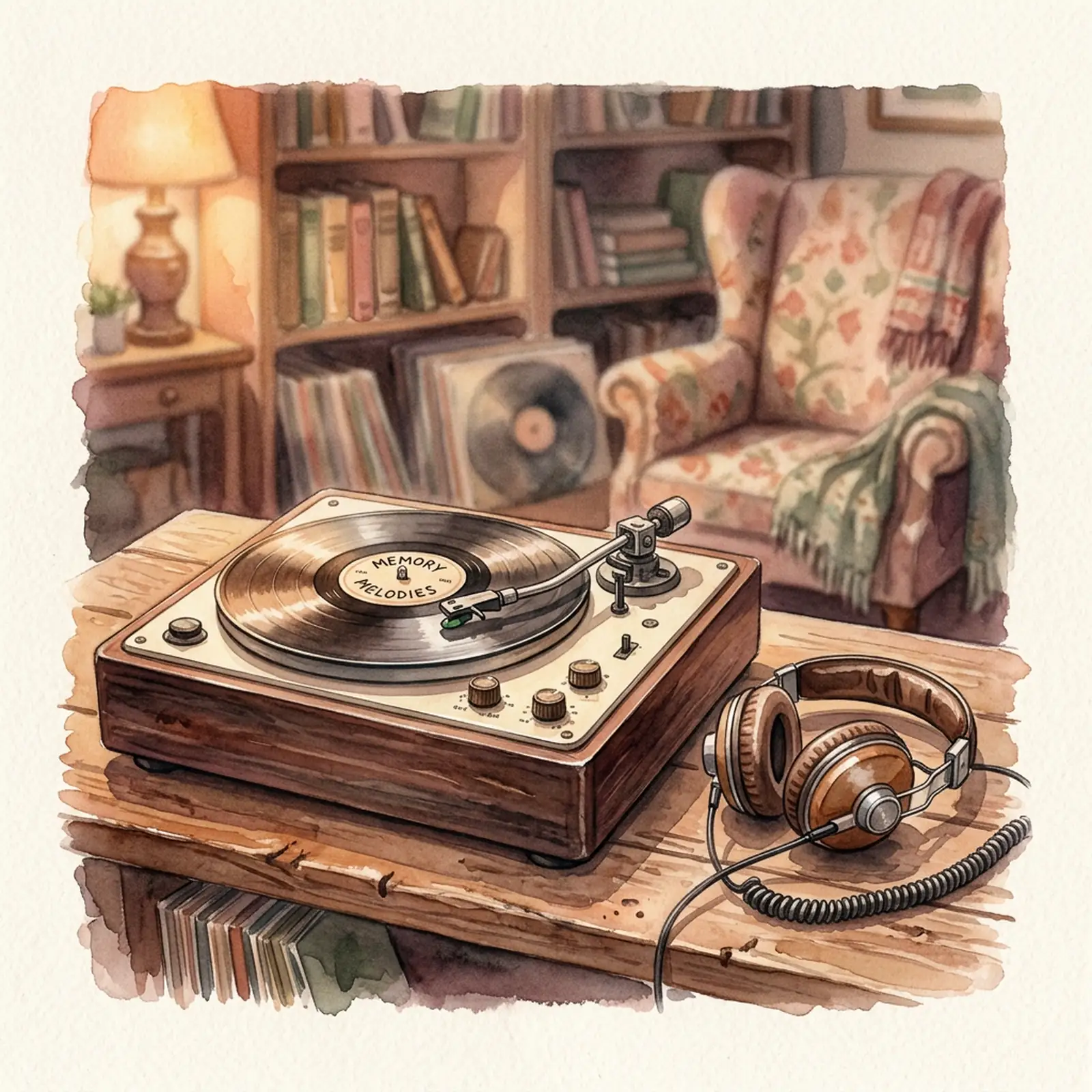
Musical memory often outlasts other kinds of memory in people with dementia.
What Makes a Personalized Song Different
A personalized song isn't a playlist. It isn't a cover of a favourite oldie. It's an original piece of music written specifically about one person — built from the details only the people closest to them would know.
At What's Your Beat, the process begins with a commission form. You fill it in with details about your loved one: their name, what they've always loved, memories you carry, the ways they've shaped your life, the things you'd want them to hear if they could really take it in. I take that information and write and record a custom song around it. Every song is different. Every song could only exist for that specific person.
The result doesn't sound like a birthday jingle or a corporate sentiment. It sounds like someone actually listened.
For someone with dementia, that specificity matters in a way that's hard to replicate with any other kind of gift. A personalized song can work in the room — played during a visit, during a quiet afternoon in a care home, or any time a family member wants to create a soft, familiar moment. It requires nothing from your loved one in order to receive it. They don't have to read it, unwrap it, or remember what it is. They just have to hear it.
It also works as a keepsake for the whole family. The song doesn't disappear. You can play it again. You can share it with siblings who live in different cities. You can carry it with you long after the person is gone, and it'll still sound exactly like something that was made for them.
How to Commission a Song Through What's Your Beat
Commissioning a song is straightforward. You fill out the story form, share what you know about your loved one, and I take it from there.
Commissions start at $49 for the Starter package, which includes a ~2-minute song delivered within 7 days. If you want a longer track, lyric sheets, or faster 48-hour delivery, the Tribute ($99) and Legacy ($199) tiers are available. Other premium human songwriting services often charge $150–$200+ as their starting point.
To commission a song, visit the commission form and fill in your story. The more specific you are, the more personal the song becomes. As you write, think about:
- Your loved one's name, and what people call them
- Where they grew up and what that place meant to them
- What they loved — music, food, a hobby, a place
- A memory that captures who they really are
- The people who matter most to them
- What you'd want them to hear if they could fully receive it
I shape and record every song myself. AI may help with parts of the creative process, but the final song is mine — not a generated output. Standard turnaround is within 7 days, but the care I put in is evident in what comes back.
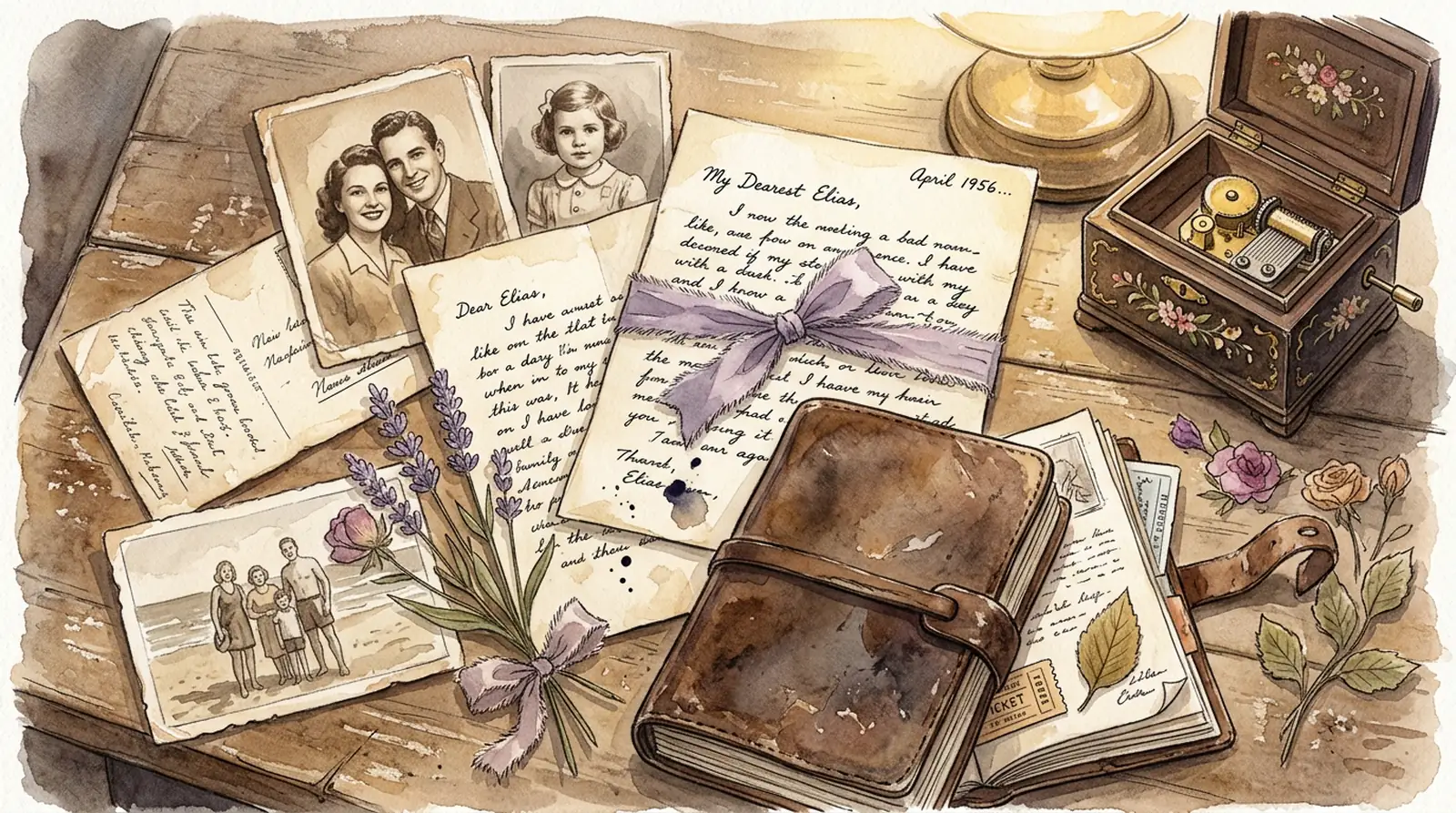
The story you share is what makes the song yours.
"Music reaches places in the brain that dementia tends to spare. A song built from someone's own story may be the most personal gift you'll ever give."
Other Meaningful Gift Ideas for Someone With Dementia
A custom commissioned song is a strong first choice — but if you're building something larger or want a few options to use together, here are some that tend to hold up well for someone with dementia.
A sensory memory box
Fill a small wooden or fabric box with sensory objects: a piece of familiar fabric, a printed photo on matte paper, a scent they'd recognize — a hand cream or soap they've always used. Keep it simple. Fewer than ten items. Too many things at once can overwhelm, and the goal is ease of access, not abundance.
A photo book with short captions
Choose 10–15 photos from specific, meaningful moments and add short, simple captions beneath each one: "Your wedding day, 1965." "You and Margaret at the beach." Something they can hold and turn through slowly, at their own pace. Simple captions work better than long descriptions — the photo does most of the work.
A curated music playlist
Build a playlist of songs from their youth — the music they'd have known in their teens and twenties. Save it to a device with simple controls. A small Bluetooth speaker and a tablet set up beside their bed can make this easy for care staff to play too. This can work hand in hand with a personalized song, as a longer listening session around a single meaningful piece.
Voice messages from family
Ask siblings, children, grandchildren, or old friends to record short audio messages. Even 30 seconds each. Compile them into a single folder or video. Even when your loved one can't respond much, familiar voices carry something that text or photos sometimes can't.
None of these are as personal as a custom song. But they're all built on the same foundation: meet them in a place they can still reach. Keep it sensory. Keep it familiar. Make it something that requires no effort from them to receive.
What to Say and Do When You Visit
You don't need to have the perfect thing to say. Most of the time, you don't need to say anything profound at all.
Show up. Sit close. Put on some music. Hold their hand if they'll let you.
People with dementia often respond more to presence and emotional tone than to the specific words used. The warmth in your voice, the calm in the room, the familiar rhythm of being with someone who loves them — these things register even when words don't fully land. You can say very little and still give an enormous amount.
If you're not sure where to start, music is a reliable door. Play the song you commissioned. Put on the playlist you made. You don't need to explain it or announce it. Just let it be in the room with both of you. Watch what happens. Sometimes nothing much does. Other times, something shifts.
Some visits will be easier than others. Some days your person will seem more present; other days they won't. That variability is painful, but it doesn't mean the difficult visits don't matter. They do. Your loved one doesn't need to respond visibly for your presence to mean something.
It can also help to bring a simple, consistent ritual to each visit — something small that happens every time. Playing the same song. Sitting in the same chair. Bringing the same hand cream to use while you talk. Routine and ritual are grounding for people with dementia in a way that novelty often isn't.
There's a post on what to say to someone grieving that explores presence and language more broadly — it's worth reading if you're carrying a lot and searching for words.
Sometimes the most meaningful gift isn't something you bring. It's the fact that you came back. Again. Even when it's hard. That kind of love doesn't need to be explained to be felt.

Every song at What’s Your Beat is personally created, shaped, and recorded by me, with AI used as a creative tool in parts of the process.
Ready to give them a song that was made for them?
You share the story. I write the song. Fill out the commission form and tell the story only you can tell.
✦ Commission Your Song — From $49Not sure which tier to pick?
See Pricing & Packages
Frequently asked questions